
PrideNomad Unleashed
The Truth Is Inside You: Andres Camilo on Art, Loss, Travel, and Starting Over
Discover how Andres Camilo rebuilt his life by starting over through art, travel, and inner resilience after losing everything. Tune in now.
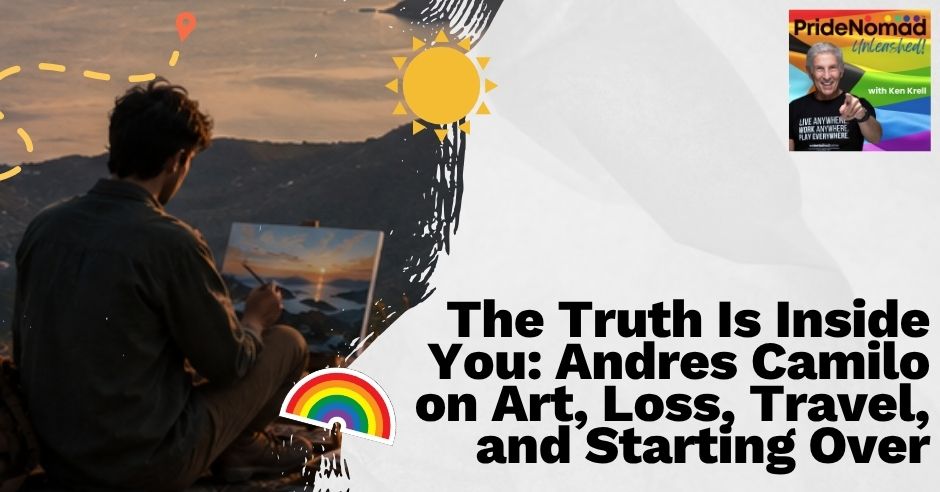
Some people lose everything and disappear.
Andres Camilo lost everything and picked up a paintbrush.
The home. The studio. The marriage. The identity he'd spent decades building.
All of it. Gone.
This episode is about what happens after that. Not the motivational poster version. The real one. The one where you're sitting in the wreckage and you don't know who you are anymore… and you have to figure out whether that's the end of the story or the beginning of a different one.
Andres chose different.
In this conversation with Ken, he talks about what collapse actually feels like from the inside — not the cinematic version, the 3am version…
How travel became part of his recovery. Not as escape. As excavation. Going to places that had no memory of the person he used to be… so he could figure out who was left.
We talk about making art when you have nothing left to prove…
Being a gay veteran in spaces that were never designed for people like him…
The intersection of military service, queerness, and creativity — three things the world keeps telling you don't go together…
And the moment he realized the truth he'd been searching for in every new city, every new country, every new canvas… was never somewhere else.
It was inside him the whole time.
This is for anyone who's ever had their life fall apart and wondered whether starting over at this age is even possible.
Andres didn't wonder. He did it.
And what he built from the wreckage is more beautiful than what was there before.
Love the show? Subscribe, rate, review, & share! PridenomadPride Nomad Letter | Subscribe to PrideNomad Letter
Watch the Episode here
Listen to the Podcast here
The Truth Is Inside You: Andres Camilo on Art, Loss, Travel, and Starting Over
Ladies and gentlemen, welcome back to what you're going to find to be an incredible session here at the World Playground Summit because I want you to meet somebody who understands transformation better than almost anyone I know. Someone who's lived multiple lives in one lifetime. Meet Andres Camilo. Colombian-born, American-raised army officer, corporate climber, and now one of the most emotionally raw artists you'll ever encounter. This isn't your typical quit-my-job-to-follow-my-passion story. No. This is about what happens when your life breaks open, and you have the courage to show the world what spills out.
After serving in Afghanistan, after building that successful corporate career, Andres was carrying something invisible to most people. The weight of trauma, the ghosts that follow you home from war. When words failed him, he picked up a brush. What started as therapy became transformation. What began as survival became rebirth through watercolor, oil, and charcoal. He started telling the truth about what it means to be human, the vulnerability that we hide, the resilience that we discover, the magic we forget is possible.
People responded, not just a few of them, almost half a million of them, because in a world obsessed with filters and perfection, Andres was offering something different, raw, unflinching honesty. Here's where the story gets even more interesting, because just as his art was flourishing, he lost everything in those California fires. His home, his studio, and most of his artwork, gone. For most people, that would be the end of the story. For Andres, it was just another beginning.
Because if there's one thing he understands, it's how to create from the ashes, how to find beauty in what remains. As he shares his journey with us, I invite you to listen not just with your ears, but with the parts of yourself that are still waiting to be transformed. That's what his art offers to all of us. A reminder that our wounds, our losses, and our deepest truths are not just things to survive, but the raw materials of our most authentic creations. Please help me welcome the soldier who became an artist who became a healer, Andres Camilo. There you go.
What an introduction.
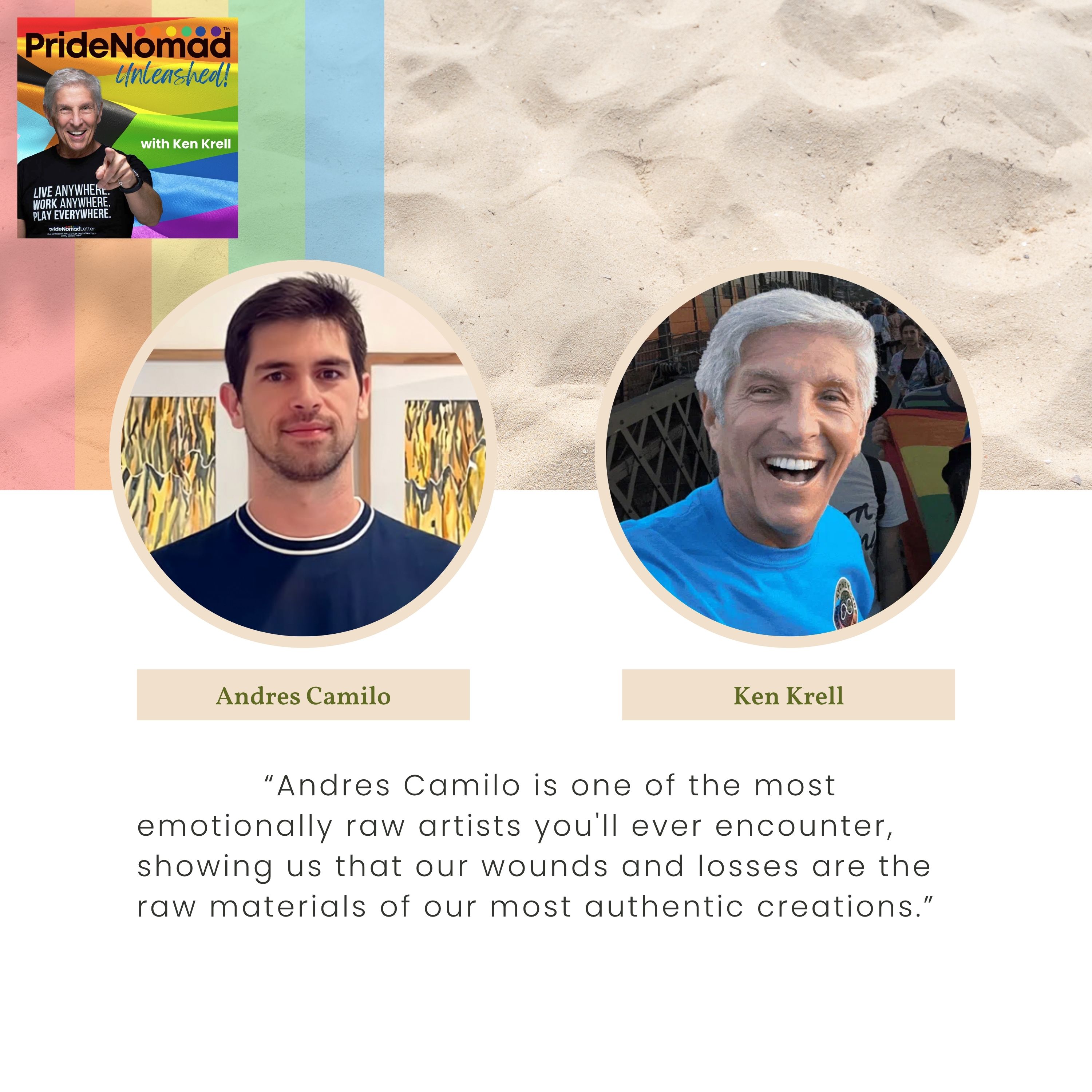
Welcome. It's great to have you here. I'll tell you, for those of you watching, Andres and I have had conversations before this. I was like, “Please do not say any more because I want to keep it spontaneous,” because he's so interesting. I want to get right down to the moment your life blew up. We have a limited amount of time. I really want to dive into this.
Which time?
We'll see. I got plenty of time. I think our viewers are limited here. Your life blew up, and your relationship ended, your house burned down, your art was gone, just another day, right? What the hell did those first few weeks actually feel like, and what did you do when you woke up in the morning?
Rebuilding After Total Collapse
Honestly, the fire and the relationship falling apart, to me, feels like the middle of the story. I say that because I think there's a big takeaway that I want to get to. I lost my mother a year before the fire. Me and my ex-husband now at the time, right after my mom's death, were trying to have a kid, and we had a failed adoption. We already had a very tumultuous year. I say that the fire is the middle of the story because I think first and foremost, it's the order of things that taught me this big lesson. By the time the fire happened, I was already pretty emotionally resilient to terrible things, and really emotionally charged events had happened.
The fire felt like, “Really, on top of everything, this is happening now?” It was bizarre and just surreal. It felt like I was in a movie. For the first few days, I really did wake up with a bit of a sense of victimhood. Why is this happening to me? Over time, with every new waking up, it felt like it just cleared my whole life for the life that I wanted to live. Now I see it as a weird blessing and a very freeing event in my life. The first few weeks are really this sense of, “What is going on with the universe? What's it trying to tell me? What is happening?”
That's not just a loss. That's a complete system reset. That's just easy. When the world stops making sense as it did, what grounds you enough not to collapse?
Building Resilience Through Pain
A couple of things. Because of my experience with the military and war, I sought therapy, and this was from 2014 to 2020. I engaged in therapy and really wanted to heal myself. I read books like The Body Keeps the Score to learn about what's happening with my body encountering trauma. I started meditating. I often recommended meditation. It was weird at first. I didn't really see how just sitting still would end up being this thing that, once my life starts falling apart, would be this grounding force. Again, it wasn't overnight that I found these solutions. It's been a journey, and it's almost like the experiences of war and then trying to heal from that is what set me up to then be more resilient when stuff kept happening.
I asked, which time did my life blow up? It's had multiple iterations here. I do feel stronger every time it happens. That's bizarre. I still do not understand the outcome either, but meditation, art, and most of all, my friends and family that were there for me. It's a moment that truly tested relationships in my life. I had so many people just reaching out, offering support, offering a place to stay, clothes. I have friends that were just randomly appearing and showing their support. I think we know we have this support system. It's not very often that you feel it, right?
It's like a safety net below you. You do not fall very often because we're all trying to keep ourselves together and not rely too much on people, but when the floor just really falls underneath you, you really feel that the net catches you, and that's been wonderful. My friends have hosted me in all parts of the world, and that's felt like I'm really taken care of, and that's the most grounding thing.
That's wonderful. Everyone that's tuning in to this must get that it's going to happen to you too. Not that you lose your house or anything, but shit's going to happen to all of us. It always does. It's part of the universe. It's part of the testing. It's part of how we grow, and it's the resilience of that and being able to, and also to have that support system that can serve you and help you. I want to share something that I learned a number of years ago, and it's a great metaphor.
Stop searching every city for answers when the truth has been inside you all along.
I was struggling with my own shit, as we all do. I had a session with an Indian chief, a shaman. I was like, "Listen, can you just help process me so that all this pain can go away?" In a perfect world, “Come on, Samantha, give me the nose, let's make it all go away.” He said to me, "Ken, that's not how it works." He said that they actually did a study a number of years ago with butterflies, and when the butterfly is in a cocoon before it comes out, I forget the terminology for it. They found it was beating its wings against the cocoon, and they thought, "Let's make it easier for them and open the cocoon."
The butterfly comes out and promptly dies because there is no cartilage in the wings to hold it up. The struggle was what was building the muscle or building the cartilage and the strength to be able to allow it to fly. All the pain and the bullshit that we're dealing with is that cartilage that allows us to actually fly. Because you didn't sit still, you started painting. You created new pieces fast. You were resilient. Most people will not do that because they haven't had the elements of bullshit that we've had to deal with and all that pain and so on. They gave you the strength that others just couldn't do.
Holding Pain as a Pathway to Joy
I started painting and traveling. I said, "If I do not have a place to live, I am going to go and spend some of my resources that I do have instead of trying to recreate the space in traveling and visiting the friends that I haven't seen in a long time, just getting hugs from family members around the world. I'll just paint while doing that." It's funny, you talked about the shaman telling you about pain because I've sat with ayahuasca medicine in the last year, and one of the experiences I had that was very healing was this sense of trying to understand pain, and this was after I lost my mother. I was just in this place where I felt very grounded, and I asked the universe to show me all its pain, and I meant that in the moment.
In the moment, I felt like I just wanted to understand it and know that I started to understand that pain is a necessary thing. We cannot experience the joy and the contentment or all these good moments without knowing what pain is. I thought that if I could hold it, I could maybe make sense of it or understand what it does to me and how it is good in the life experience. I'll skip through the visions and stuff that came along with it, but I think the takeaway was almost like going to the gym.
It's almost like trying to understand the pain and really processing, and a lot of my art has to do with shadow work, which is all about really trying to understand that hurt child inside. I ended up realizing that when you hold pain, it's like going to the gym. You do get better at it. Having my life continue to fall apart in numerous ways, whether it's my marriage or the fire, I actually went to Colombia after the fire and got my phone stolen. They got through Apple's security and the bank apps, and there was money being funneled out. This happened about a month and a half after the fire.
This was like the one night I went to this show, and leaving it with some friends, said goodbye to them and went off on my own to catch a car. That's when it happened. All these experiences being painful and stressful, I feel just like you said, like with the butterflies, it really does make my wings stronger. It really has felt like a movie this last year. I'm just grateful for the order of things. Having lost my mom first really was the big lesson of what loss really is, and by the time I lost my phone, they actually stole all my crypto, which is like just adding insult to that.
Let me not travel with you.
By the end of it, I was like, it's just stuff. I cannot replace my mother. I am not going to be a dad this time around. My marriage didn't work out. It's like the lessons got simpler as they went along. By the time I'm losing money, I'm just like, it's just stuff.
This is a conversation about money being energy and all that. Yes, you'll make it back in whatever way because it was a scorecard. I want to jump in for something because I'm going to do plant medicine for the first time in a few weeks, actually in about a month or two. What was ayahuasca like for you?
Healing Emotional Wounds with Plant Medicine
It was life-changing. As I said, I've done a lot of therapy. I specifically did this therapy called ISTDP, Intensive Short-Term Dynamic Psychotherapy. The goal is to really have you understand your emotional self. You would go through and talk to the therapist about your feelings on just random topics. I lost my brother to suicide about eight years ago. I started with that. At the time when I started this therapy, my mom had cancer. She was getting sicker by the day. I was going through a lot. I would start about my brother's suicide and say stuff like, "We had a big age gap. We weren't that close," trying to intellectualize it.
People don't just connect to your art, they connect to your raw, honest story.
This therapy really helped me because the therapist would come back and say, "No, we do not need to hear all those things. You just have to sit with that. Sit with whatever feeling is coming up." I would intellectualize it, talk about it in different ways, just try to struggle my way out of it so I wouldn't have that feeling. This therapy was all about really getting in touch with your feelings and learning how to label, like, that's grief, that's anger, and where you feel it in your body. Plant medicine was all of that in one night. Maybe it's because I've done the work to really graduate it to the next level.
For me, it was just like, "This is happening. That's what these things are." I was able to connect so many feelings with experiences, and instead of running away from it, I just want to sit with it. That's where this moment I had about calling on pain came from. It's like, if this therapy of me just holding my grief and sitting there and just identifying where it is so that next time it happens, I know it's grief, and I'm not just anxious about it, and I'm not taking it out on my partner or getting stressed at work for no reason.
I would be able to recognize, “That's grief about my brother," and be able to sit with that. The more you hold it, the stronger you can deal with it. That's where that whole thought in the middle of my journey with the plant medicine was about. "Can I hold as much as I can handle right now so that my body knows what pain, this misery and suffering is like?" When things come at me in the future, I can deal with that.
I really do believe we're given as much as we can take on. It's like that moment made my life almost so much harder, but made me so much more content with it and happier and seeking what really matters, like my friends and art, and start looking at my life purpose because now I have time to figure out what my blank canvas is going to be. It really was a blessing, but it's been a bumpy road.
I'm going to start talking about that in a second, but I want to put something in perspective for our viewers, because they may be thinking, "What are we talking about all this mental shit for? We're talking about being a nomad and traveling the world." Here's the thing that I've discovered is wherever you go, there you are. If you're in your own level of fucked-upness, that's a technical term, of course.
You're just taking it with you wherever you go, and you're going to travel the world as your playground and be happy. We still got to work on ourselves, because the fact is that as we travel, and we're traveling solo, as so many of us do, there are times when you're alone, and you're stuck with who you are. Unless we process that in a way to not necessarily kill the demons, but certainly manage them, the journey is not going to be as much fun.
I would actually say that the more you travel, the less you can actually run away from it. It's almost like in our routines where we can keep these demons at bay in a weird way. When you find yourself in a country where you do not speak the language, and I'm currently in Switzerland, people are not as warm as they are in California or Colombia, so it's a bit tougher to make friends. I spend a lot of time by myself.
I have to deal with myself and get to know myself. It actually really forces you to sit with figuring yourself out and being content and taking care of your mental health and being proactive about it. Eat, pray, love, right? There's a reason that's the movie. That's the path that the Julia Roberts character goes on and goes to all these countries. I feel like I'm living it. There's something to that.
You have a whole different lifestyle, which is fascinating. Now you're taking the role of an artist, which you embraced in previous iterations of Andres, but not on a full-time level. Painting, typically, and I think about this starting artist, painting doesn't typically come with a paycheck. How are you navigating the money side of this to have your reinvention? How are you selling, direct, galleries, you're doing corporate stuff? How are you able to go from aspiring artist to professional artist?
Monetizing Creative Passion on the Road
That's a tough one, just because, right when I started getting traction and started showing at galleries and got work accepted into a museum, all of it burned down. I lost over 60 paintings, so then it's not like I can just say, "I'm just going to sell what I have to live on." That was the goal, is to transition to the artist lifestyle, and I think losing my home and all these things forced me into it. Now I'm just like, "Let's do this." I'll start out with what I said before.
My friends really were there for me. At first, it was my friends just being like, "Come stay in our spare bedroom." That comes with discomfort. That's not just like, "I have everything I need." It's like you're staying in other people's homes. I've been doing that for a bit. I stayed with my family. I've had to accept the help and swallow my pride because I wanted to paint. I didn't want to go look for a different job. I know that this is what I was here to do, and what fuels me and what makes my heart happy. I just had to let people help me, which is number one. Number two, I use Patreon.
I realized that a lot of people are interested in this transformative moment, and sharing my story and getting really deep into what my art is about and what I'm feeling throughout it, because I have done all this work to get in touch with my feelings. I think a lot of my wounds come out of a lack of expression as a child. I was raised by my mother, who tried her best, but she was busy with raising a second batch of kids and just getting pregnant and then taking kids to these activities. I was a teenager, and my stepdad, who was just very cold, often spent time alone and in this not-expressive state.
I joined the military, not the most expressive career. I joined the Deloitte corporate world, again, doing cost management. I just felt like my expression was very tightly knit, so when it finally let it out, it just burst. Painting is just part of it. Patreon has allowed me to go deeper into telling an audience what the feelings are and what happens with this conversation we're having of just being a little more raw and sharing a story. People love narrative. It teaches them what they may do in a situation that's also hard, what they may go through if they lose their home, how they can make sure they do not fall apart.
We listen to stories about exactly why this is happening so that we can learn from that. I realized that there was a lot of power in just sharing my story, sharing my thoughts and feelings, and my art in a combined package. I do videos and showcase that on Patreon. I am selling my art now that I've reassembled it. I ended up going to the museum that had accepted two of my works and said, "I lost everything, but I started painting again, and I painted." I showed them like five things, and this was a month after the fire. They're like, "You've done all this in a month?" They're like, "Yes, we love these two. Those are definitely going in the show to replace the ones you lost.
You're painting this fast right now. We have got to talk about a solo show." That's even more fuel for the fire. I'm like, now just non-stop. I'm just making sure I can get to work because I know that there is good stuff coming. I know that my work is being well-received. I have lots of interest on social media. People just want to help. People follow the story because I'm sharing it and I'm telling people what it is. I'm not going out and being like, “Everything's fine."
There's a part of me that is showing maybe a happier side than what normal life is like, but I think I'm being pretty vulnerable in the way I share this stuff. People connect to that, and I know that my art's going to do great when I start getting it all on the website and really start getting sales going because it's already being well-received. That's how I think about the money part of it. It's like, it's the attitude that attracts.
The thing that really excites me about what you're doing is that you are reinventing yourself, and I want to ask you, before you dive into a couple more specifics, how does Patreon work? I'm thinking for those of us that are, on our viewers that are watching, is that a viable way for them to fund their journey?
I definitely think so. If you are able to be consistent and share something that you're passionate about. Again, I think that passion is what attracts people. When people see that your face lights up when you are doing a podcast or painting or whatever, you may offer a Patreon. On Patreon, it's a blog that you have where you can share audio, you can share video, you can share pictures. Different people curate their pages a bit differently, but it's all behind a paywall. You would promote on your other social media channels, and people pay to go behind that paywall. Some people do comics and share comics, anime-style, that get released every week.
Some people have those murder mystery documentary-style podcasts that just tell creepy stories about murderers, and people love that, and they go, and they want to support these creators instead of giving all their money to the big Netflixes and Amazons out there. Why not support these individual creators? At least for me, it's not enough to make a whole living right now, but it's enough to get started and rebuild. I still do traditional social media work, more influencer stuff with clients and promoting products, and that's been something I've been doing for eight years, so I'm still doing that work. The Patreon has been this surprising influx of real people, real connections, more direct. There's just less BS. I just have to talk to an audience.
Looking at it, I haven't considered that. More and more, when I talk to different people, which is why I love this whole process that we're doing, it's something that I would never have considered. “Wait, this could be a good idea.” As you watch this, dear viewer, consider that this could be an add-on to what you're currently doing. With that, and with you being somewhat out of control in other people's places, like right now I'm at my mom's in Miami, and trust me, there's no control when you stay at your mom's.
You can't experience true joy without understanding and holding your own pain.
I recreated my studio so I can actually do the recordings here. There's construction going on, and I've got her schedule to deal with, and she's listening to this thing, and it's just craziness. How are you managing that so that you can actually get your work done? You can take your stuff with you. You can stay in a creative zone when someone's playing music that you cannot stand. How do you manage?
Using Restrictions to Fuel Creativity
So far, I do not know. One, I have a very high tolerance for it. I was in the military. Close quarters with lots of people really trains you to just deal with it. I have these thick headphones. You just learn to deal with it. I have been getting a lot better at boundaries with people and just at least explaining what your needs are. That's important for all of us, and I think a lot of us put ourselves in certain boxes. I know that when I hosted people at my house, RIP, I wanted them to tell me how to make them most comfortable. Why wouldn't the people that are hosting me want that too?
It's a little bit of just letting go of my own fears about that. The other thing is I think creativity loves restriction, like to a certain point. I think that we do get more creative when there are certain boundaries. For example, if I am traveling all the time, I really want to go bigger. I cannot carry around large canvases while I'm traveling. I really started thinking about it, and I'm starting this series, which I've already done a few pieces and shared them online, or do these smaller watercolors and then they get ripped up into a collage. I want to get to a point where I can compile it like my friends in LA, where I have more space. I'll recollage it into a bigger piece.
I've been doing that on the road so I can just keep painting. Again, it's like the style came out of the situation and the need. The very first thing I did was I made a fire. Everywhere I went in Colombia, Switzerland. I was in Mexico. I was painting fire. It's a little on the nose. For me, it was healing. I do not care what the public thinks. I need to reprocess these flames in my own way and let it revitalize me and have it work for me. I just kept painting flames. I had a stack of watercolor flames, and I just ripped them up and created these large collage watercolor paintings.
The other thing is here. I'm only in Switzerland for, I think, roughly six weeks on and off, and just taking on as much work as I can finish has been very motivating. I'm painting faster than I ever have just because I know that I only have six weeks to finish all the stuff as opposed to at home. I would have like twelve unfinished paintings that I would put in the closet and start a new one and be like, "I'll eventually get back to that one." Now I'm actually finishing stuff and just at a faster pace. It's surprising how it actually works better sometimes.
You make a really good point. I hadn't really thought about being on the road as we are. We have to be much more effective and process-centric because, if you want to be able to, I'm going to be in Colombia for the first time in a few weeks. I cannot wait after the summit's over. I'm going down. We'll talk about that offline. I cannot wait to go. We've covered it in the newsletter and everything. Now I can finally go and say firsthand, my mom's been down there, my friend's been down there. What the hell's wrong with me? When I go, I have to have my shit together so that I can get my work done, so I can go see all the things in Medellín and Bogotá and everywhere else that I got to go to.
If I'm not organized and if I'm not able to keep things in that organization, you saying you're getting it done while you're still in Switzerland, I'm going to lose Colombia. It'll just be like if I was in any other hotel someplace or Airbnb someplace. I've had that before where I've been in another country. You never freaking know it because I was still inside the whole damn time. It means we really got to be more effective, which leads me into actually one of our bonuses for VIPs. While we're on the segue, let me do that. Let me sell VIP for a second, then I will take you to the lightning round.
We'll head off into the wild beyond because we've got to land the plane, because time is flying so fast with you. It's always fun to talk with you. VIP, we created a VIP program for you guys that is second to none. If you haven't upgraded to VIP yet, now is your time to do it. We've made things so simple. The bottom one is that you're not going to get to watch all these videos live, as we have so many of them for you. VIP allows you to catch others. For example, we talked about ayahuasca and so on.
I interviewed Shelby Clark, who owns and runs the Jungle Gay neighborhood in Costa Rica, where I'm going to be in a few weeks to go and do this medicine healing thing. It relates to all these things that are going to be really important. With that, also, we have this entire element of VIP bonuses where virtually all of our speakers are donating cool stuff, whether it be discounts on things or, in your case, we'll let you tell them what they're going to get that no one else is going to see because it's all exclusive for us for right now.
It's early access to it and discounts on stuff. There's all sorts of stuff that you'll get that are worth thousands in the aggregate. You'll get that. When I talk about being efficient and effective, I'm putting together an AI Freedom Formula for you guys. It'll be a training worth about a grand. We'll offer it after the summit's over so you can digest the summit first.
When your world falls apart, it's often clearing the way for the authentic life you're meant to live.
The whole idea is how can you make money on the road? How can you be more effective and create more freedom using the power of AI, which has allowed me to do cool intros like the one I just did for you, Andres? We put a lot of time into this, but it's great. You'll learn how to do all that. With that said, why do not you share with everybody what you and I talked about earlier about what they're going to see before anybody else does?
Because I've been spending all this time painting, I'm just now gearing up the machine to compile all of the paintings that I've now completed since January and will be putting it into a catalog for everyone to see everything I've completed and these little snippets of what I'm working on.
Awesome, and you're going to see it first. There will be a link here. Make sure you grab your VIP, and thank you for contributing to that. It's awesome. I cannot wait to have everybody exposed to you as we can. Are you ready for the lightning round?
Let's go.
Here we go. A tool or ritual that's helping you stay sane right now.
Finding Your Truth Within
Five gratitude things every morning.
Awesome. Where's the weirdest place you painted something recently?
Everywhere is so weird and not a painted scene. This one's truly hard. I guess it's atop a tree house in the jungle in Colombia. It's a remote area called La Guajira. It's in northern Colombia. I stayed in this tree house. I felt like it was Avatar. I just stayed up there for a week and didn't have phone reception and met the Native American Kogi tribe that protects the mountain. It was amazing. It was so cool.
I need to get information. What's a song that instantly shifts your energy?
I go through little obsessions. Right now I'm really into the song called Starburster by Fontaines D.C. I do not know. It's just I walk the dog, and it's been like this. "I really like lyrical music, like just shoot me in the face with lyrics." It's been bad, and I try to learn it.
Next one. Got a couple more, and we'll call it. If you could paint a message on the side of every building in the world, what would it say?
The truth is inside you.
I love it. Now the final one. If your dog could talk, what would he say about you?
My dog cannot talk. What would he say about me? He probably says that I'm really boring. He's like, "This man just sits here and paints for hours, and then he goes on a short walk and then comes back and paints again. We haven't seen another person in like a week." He's probably really bored. The walks are beautiful.
You're a great part of It's awesome. Any final words you want to share?
I'm so excited, and thank you so much for this opportunity in this chat. I feel like, like I said, the truth is inside you. For me, all of this stuff and my energy shift and out of all these common negative things that have happened in my life really have been meaningful because I looked inside and wasn't scared to see what I found. If everyone does that, the world could be a better place.
Amen to that. Andres, it has been a joy and a pleasure. Thank you for being with us. Ladies and gentlemen, we'll catch you on the next one, but be sure if you haven't upgraded to VIP, you are going to want to watch us again and again because there are so many gems in here that are there for you. Andres, you're awesome. Thank you so much.
Thank you. Happy Pride.
Happy Pride.
Important Links
About Andrés Camilo
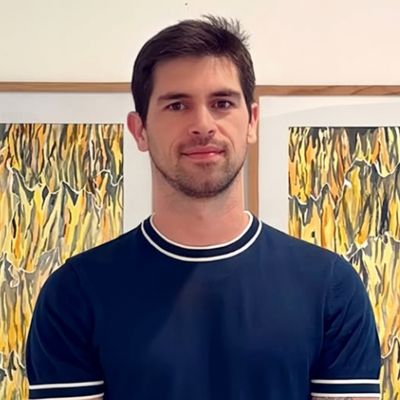
Andrés Camilo is a Colombian-born, Los Angeles–based artist working within a language of magical realism. He works from an instinct shaped by survival and a deep, embodied knowing, using precision to hold it in place.
His paintings take form through animals and built surfaces, where feeling is held in the image rather than explained. His work brings together nature, erotic charge, and spiritual exploration as expressions of the same force. Nature carries instinct without language. The erotic locates intuition in the body.
The spiritual emerges through moments of recognition rather than being told what to believe. Andrés immigrated to the United States as a child and later served as an officer in the U.S. Army, including a deployment to Afghanistan during the “Don’t Ask, Don’t Tell” era.
Painting began afterward as a way to process trauma and return to the body as a place of recognition rather than control. What started as a private process became a sustained practice.